Westbound settlers along The Oregon Trail once navigated the sandy banks of the Platte River during late April and May, meticulously timing their journey to evade the severe winters. Unbeknownst to them, just weeks prior, those same wetlands reverberated with the calls of countless sandhill cranes on their migration journey from Mexico and the Texas coast to northern Canada and Alaska. This migration represents one of the longest and most significant on the planet, earning recognition as "our version of March Madness," as noted by Grand Island Tourism Director Brad Mellema.
After spending nearly a week observing cranes swooping over cornfields and roosting along the river at sunset, I find it astonishing that more travelers do not flock to the Nebraska Flyway, nor does this extraordinary spectacle receive the acknowledgement it deserves as one of the nation's natural wonders. Equally alluring is March's mating season for the spirited prairie chickens, where males energetically stomp, spar, and inflate vivid orange air sacs during their distinctive booming dance. One does not need to be an avid birdwatcher to appreciate the rarity of experiencing both of these captivating displays in a single day.
The key cities within sandhill crane territory include Grand Island, Kearney, and North Platte, where historic trails, railways, and highways converge. While my primary focus was stalking the cranes, I also unearthed Buffalo Bill’s hometown, the world’s largest rail classification yard, prairie art museums, and a brewery complete with a dog park. Below, I outline how to engage with the sandhill crane migration and explore the rich history of the Central Platte River Valley in Nebraska.
How to see the sandhill crane migration
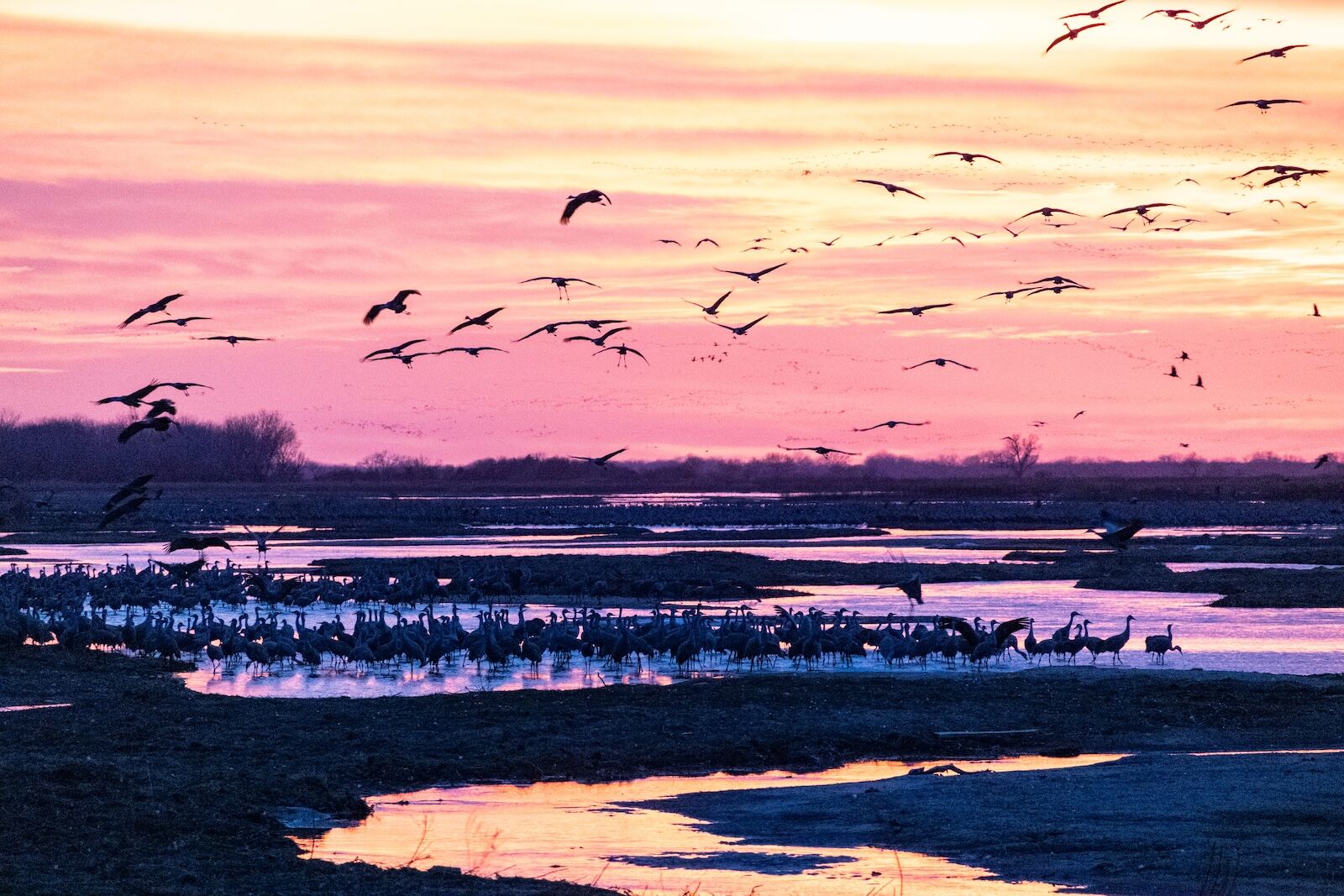
Watch the sandhill cranes soar at sunrise
Established in 1978, the Crane Trust oversees nearly 10,000 acres of wetlands and prairie, providing essential habitat for the endangered whooping cranes, along with grazing bison. The preservation efforts for whooping cranes also benefit sandhill cranes. Early one morning, I joined an expert guide at the Crane Trust Nature & Visitor Center at 7:00 AM for a riverfront blind tour, where I spent two hours absorbing the sunrise while waiting for the cranes to thaw from the ice enveloping their legs due to the prior evening’s sub-zero temperatures.
While the birds did not warm up in time for the twelve or so individuals in my blind to witness their flight before breakfast, I was grateful to be situated in a VIP blind—a modest wooden cabin designed for intimate wildlife observation—equipped with a heater.
The Crane Trust offers morning and evening tours starting at $55 per person, alongside more economical private footbridge tours at dusk for $15 per person. These footbridge tours allow you to observe the cranes as they fly overhead to roost along the river, although they do not offer the same close-up views or protective shelter. Weather during my birdwatching trip varied significantly, ranging from an average of 18 to 63 degrees Fahrenheit, emphasizing the need to pack appropriately. Tours often sell out, so it is advisable to set a calendar reminder to secure a booking in advance.
Crane Trust: 9325 Alda Rd S, Wood River, NE 68883 (Grand Island)
Feel the flock fly overhead to roost at river’s edge
Seasonal events, such as the migration, stimulate local entrepreneurship. Chad Gideon transformed his family’s unproductive river land into bird blinds optimized for photography, a cabin retreat, and river’s edge evening tours. "I took a little cardboard sign and placed it near the viewing deck by the Alda bridge, and that’s how it all began," he recalls.
While bird blinds can enhance your viewing experience, nothing compares to the sensation of thousands of birds soaring above as you sit in a camping chair along the Platte River. The primal, guttural calls of the sandhill cranes resonate like a stadium erupting as the home team scores.
Nebraska Crane Viewing: 11287 W Platte River Dr, Wood River, NE 68883 (Grand Island)
Drive through corn fields for hungry bird sightings
One reason sandhill cranes pause in Nebraska is to replenish their energy reserves with corn, earthworms, crickets, and larvae hidden within prairie grasses. While they are not roosting on the river, the cranes frequently wander in large flocks from field to field, reminiscent of a vigorous bar crawl. On my first evening in Grand Island, I drove through the farms just southwest of the city, utilizing a Toyota truck with the windows lowered as a mobile bird blind. This approach allowed me to observe the birds up close without causing disturbance or infringing upon private property.
Grand Island Roads: E Guenther Rd, E Foster Road, S Shady Bend Rd, NE 68832
Listen to the primal chorus in a bird blind at sunset
Launched with an initial acquisition of 783 acres, the National Audubon Society established the Rowe Sanctuary in 1974 to safeguard migratory birds, similar to the role of the Crane Trust. Today, the Sanctuary manages over 2,800 acres of riparian land adjoining the Platte River and offers tours along with educational programs from its recently enhanced $12.5 million facility. More than 100 volunteers from around the nation dedicate a week or more at Rowe Sanctuary as tour guides, with some utilizing onsite accommodations.
As I followed my guide along the red-lit pathway to our bird blind, I selected an open spot by the window. The blind's layout accommodated everyone comfortably, featuring cubbies for cameras, backpacks, and binoculars. Not only do these bird blinds provide optimal viewing of roosting birds, but they also frame breathtaking sunsets along the braided river. Once darkness fell, our guide instructed us to put away cameras and phones, encouraging us to entirely absorb the sight and sounds of the cranes gathering along the banks only a few dozen feet away.
Rowe Sanctuary: 44450 Elm Island Rd, Gibbon, NE 68840 (Kearney)
See the greater prairie chickens dance
Following the stunning display from the previous evening, I anticipated that the prairie chicken mating ritual might seem less impressive; however, I was pleasantly surprised. Similar to Chad Gideon, retired farmers Robyn and Kent Hubbert discovered a lek—an area where male prairie chickens engage in stomping, sparring, dancing, and booming at sunrise to attract females—on their property. They now conduct three-hour tours from their home, charging approximately $100 per person, shuttling guests to converted cattle container blinds outfitted with chairs and blankets.
Just before sunrise, five or six prairie chickens arrived on the lek like performers preparing for a show, with their low booming calls reaching our ears before they came into view. In total, around 22 birds—accompanied by several hens to agitate the males—joined in, and I found myself silently hoping for a scuffle to witness their aerial maneuvers. Following the spectacle, Robyn graciously invited all 20 of us into her home for coffee and home-baked muffins. She expressed her surprise at the diverse clientele booking her tours.
"We knew we would attract people aged 55 and older," she noted. "What we didn’t anticipate was the influx of younger travelers, particularly those in their 30s, who are eager to explore national parks and wildlife."
As one of those 30-somethings, I find it entirely unsurprising that others with similar interests are drawn to these experiences.
Prairie Wind Birding Tours: 14410 78th Rd, Kearney, NE 68845
Hop on a school bus to witness sandhill cranes from another perspective...
Share this story