Fortune
Pope Leo XIV has lung cancer despite never smoking. Lung cancer screening only targets people who did

Traditionally, lung cancer patients have often been perceived as older men who smoke. However, the landscape of lung cancer has evolved significantly. In recent years, there has been a notable increase in diagnoses among women, younger individuals, and those who have never smoked.
Lung cancer is now recognized as the leading cause of cancer mortality among women, with more female victims each year than those succumbing to breast, ovarian, and colorectal cancers combined. According to the American Lung Association, while lung cancer rates in women have surged by 79% over the past 44 years, the corresponding figures for men have decreased by 43%. Alarmingly, this trend has resulted in more young women being diagnosed with lung cancer than young men.
The announcement of Pope Leo XIV's lung cancer diagnosis on October 13, 2026, has reignited discussions regarding the increasing incidence of lung cancer in never-smokers. The pope is reported to be a non-smoker. Possible contributors to this disease include environmental exposures and genetic predispositions, underscoring the importance of recognizing potential risk factors for lung cancer that transcend smoking history to ensure timely and effective screening and treatment.
Cancer detected at early stages, such as that recently diagnosed in the pope, is potentially treatable through surgical intervention and can lead to cure for both smokers and non-smokers alike. However, current lung cancer screening guidelines do not encompass those who have never smoked, often resulting in incidental findings of tumors during examinations for unrelated concerns.
As a thoracic oncologist, I encounter numerous younger women and never-smokers who present with a new lung cancer diagnosis. For never-smokers, the diagnosis can come as a shock to both patients and healthcare providers, frequently leading to delayed identification of the disease. Researchers have noted this concerning rise in lung cancer cases among women globally and are beginning to explore the underlying reasons for this trend.
Lung cancer in women
One major factor contributing to the increased lung cancer rates among women is the delayed onset of smoking behavior compared to men, which has postponed the peak age for smoking-related lung cancer diagnoses.
Additionally, women began smoking during periods when filtered cigarettes were widely popular, which has been linked to a higher risk of developing adenocarcinoma. This is attributed to the way cigarette filters distribute tobacco smoke towards the peripheral regions of the lungs. Some research indicates that women may be more vulnerable to the carcinogenic effects of tobacco exposure, including second-hand smoke, potentially leading to lung cancer diagnoses after shorter durations of smoking compared to their male counterparts.
It is noteworthy that the majority of individuals diagnosed with lung cancer today are not current smokers. Approximately 20% of women diagnosed with lung cancer have never smoked, a higher percentage than that of men with a similar history.
Lung cancer risk factors
In addition to smoking and exposure to secondhand smoke, other significant lung cancer risk factors include a family history of cancer, and environmental exposures to substances such as asbestos, radon, and air pollution.
Occupational exposure to inhaled carcinogens, including arsenic, beryllium, cadmium, silica, and nickel, remains a concern in certain regions. The potential risk of lung cancer associated with e-cigarette and marijuana smoke is still under investigation and warrants attention.
Recent studies have also highlighted the role of genetic factors in the risk of lung cancer, particularly in patients with a prominent family history of the disease. These investigations have assisted in identifying potential genetic markers linked to lung cancer susceptibility, as well as environmental influences.
DNA alterations that either promote or inhibit tumor development may contribute to lung cancer, akin to the role of BRCA1 and BRCA2 in breast cancer. While specific mutations that predispose individuals to lung cancer remain largely unidentified, research into familial genetic predispositions could lead to a better understanding of lung cancer mechanisms and facilitate the discovery of novel biomarkers for early detection in high-risk populations.
Lung cancer screening
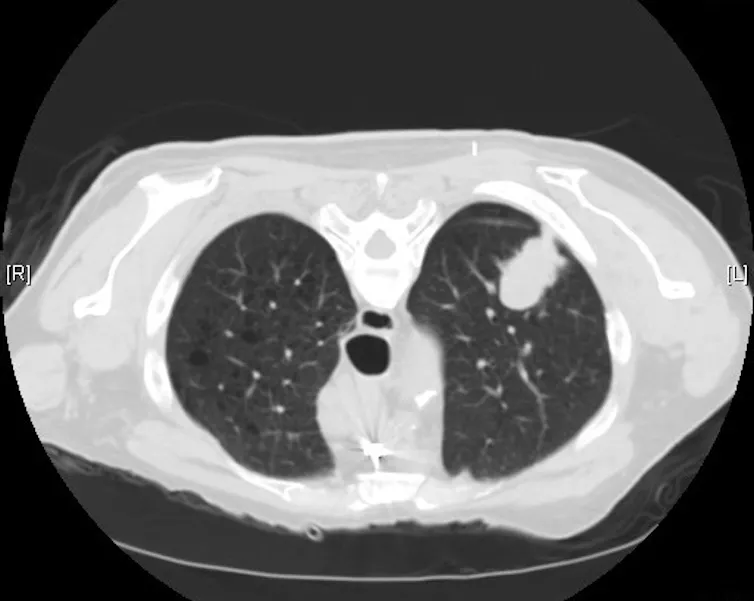
In 2021, the United States Preventive Services Task Force revised its lung cancer screening guidelines to accommodate younger individuals with a lesser smoking history. Currently, lung cancer screening is recommended for adults aged 50 to 80 who have smoked at least one pack per day for 20 years, including current smokers and former smokers who have quit within the past 15 years. Women who may be at risk for lung cancer are encouraged to consult their healthcare providers about the possibility of undergoing low-dose CT scans for screening purposes.
Nationally, while over 70% of eligible women undergo breast cancer screening, fewer than 6% of eligible smokers are likely to pursue lung cancer screening. Projections suggest that these updated guidelines could lead to a 40% increase in eligible women for lung cancer screening by allowing inclusion of those at a younger age with less smoking exposure.
Lung cancer diagnosis
Recent advancements in understanding the genetic alterations that contribute to cancer development and the capability to harness the immune system for cancer treatment have led to innovative targeted therapies and immunotherapy options, resulting in improved prognoses for lung cancer patients. Generally, women exhibit better outcomes with lung cancer than men, particularly when they are non-smokers and have tumors amendable to targeted therapies.
However, lung cancer symptoms in women may frequently go unrecognized. Common symptoms include persistent cough, shortness of breath, significant fatigue, as well as pain in the back, chest, or shoulders- symptoms that can be mistakenly attributed to other health issues. Since women tend to be diagnosed at a younger age compared to men, they may endure symptoms longer before seeking medical assistance, and healthcare providers might not immediately correlate these symptoms with lung cancer diagnosis due to the patient’s age.
Enhancing awareness of early lung cancer symptoms, broadening eligibility for lung cancer screening, and employing genetic testing for biomarkers to refine treatment approaches are essential measures that could help mitigate the growing global lung cancer epidemic among women.
By Estelamari Rodriguez, Associate Director of Community Outreach in Thoracic Oncology, University of Miami
This article is republished from The Conversation under a Creative Commons license.
Share this story